Downside Gap Three Methods – Bearish Continuation Pattern
Learn the bearish continuation candlestick pattern Downside Gap Three Methods, how to identify and trade it effectively for advanced traders.
Mark · Trader & Founder, Social Forex
Definition
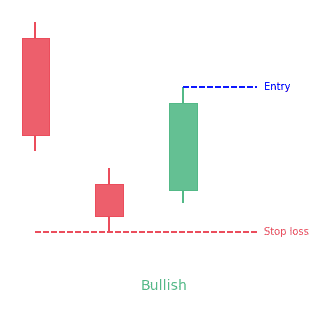
The Downside Gap Three Methods is a 5-candle bearish continuation pattern. It confirms the current downtrend will resume after a brief consolidation. This pattern often appears in strong downtrends and provides a powerful signal to enter short positions.
How to Identify
- Candle 1: Long bearish candle, large body, showing strong selling pressure.
- Candle 2: Opens with a gap down (below candle 1), small body, usually bullish or doji. The gap is not filled.
- Candle 3: Moves up but remains within the gap, small body.
- Candle 4: Similar to candle 3, continues higher but does not reach the open of candle 1.
- Candle 5: Long bearish candle, closes below the low of candle 1, confirming bearish continuation.
How to Trade
- Entry: After candle 5 closes below the low of candle 1, enter a sell (short) position.
- Stop Loss: Place above the high of candle 1 (or above the highest high of the three small candles for a tighter stop).
- Take Profit: Use the height from candle 1 to candle 5 as a target or the nearest support level.
Real Example
On EUR/USD daily chart during a downtrend: a long bearish candle (Day 1), gap down (Day 2) with three small up candles (Days 3-5), then a final bearish candle (Day 6) closing below Day 1's low. Trader shorts, stop loss above Day 1 high, target at next support 50 pips away. Price drops 70 pips.
Common Mistakes
- Mistaking it for a reversal pattern when the small candles fill the gap.
- Entering before candle 5 closes, leading to false signals.
- Placing stop loss too tight, getting stopped out by a minor retracement.
Check volume (if available) and higher timeframes to increase reliability.
Content is for reference only, not investment advice. Forex trading carries high risk.
Save your learning progress
Create an account to keep lessons, watchlist symbols, and journal notes connected as you practice.