Harami Cross Pattern
Harami Cross is a reversal candlestick pattern consisting of a large-bodied candle followed by a Doji that sits inside the prior candle's body. This lesson covers identification and trading strategies.
Mark · Trader & Founder, Social Forex
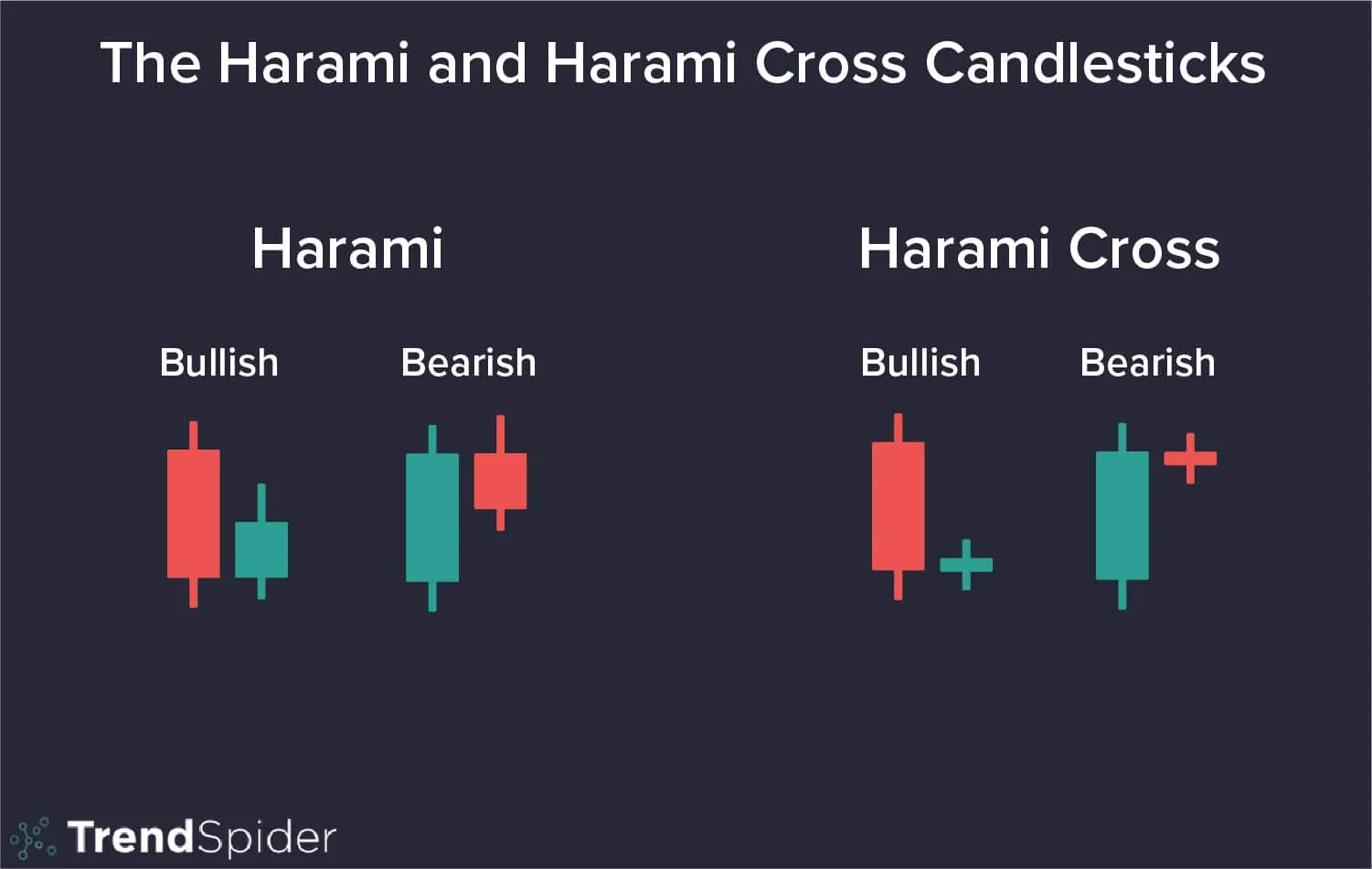
Definition
Harami Cross is a two-candle reversal pattern: the first candle has a large body (bullish or bearish), and the second candle is a Doji (very small or no body) that sits entirely within the first candle's body. The name "Harami" comes from Japanese meaning "pregnant," as the Doji is like a child inside the mother candle. This pattern signals indecision and potential trend reversal.
How to Identify
- Candle 1: Large body, green (bullish) or red (bearish), showing strong momentum.
- Candle 2: Doji candle, very small or no body, wicks may be long or short but the entire body (open and close) lies within the range of candle 1's open/close.
- Volume: Usually decreases on the Doji compared to the prior candle, indicating weakening momentum.
How to Trade
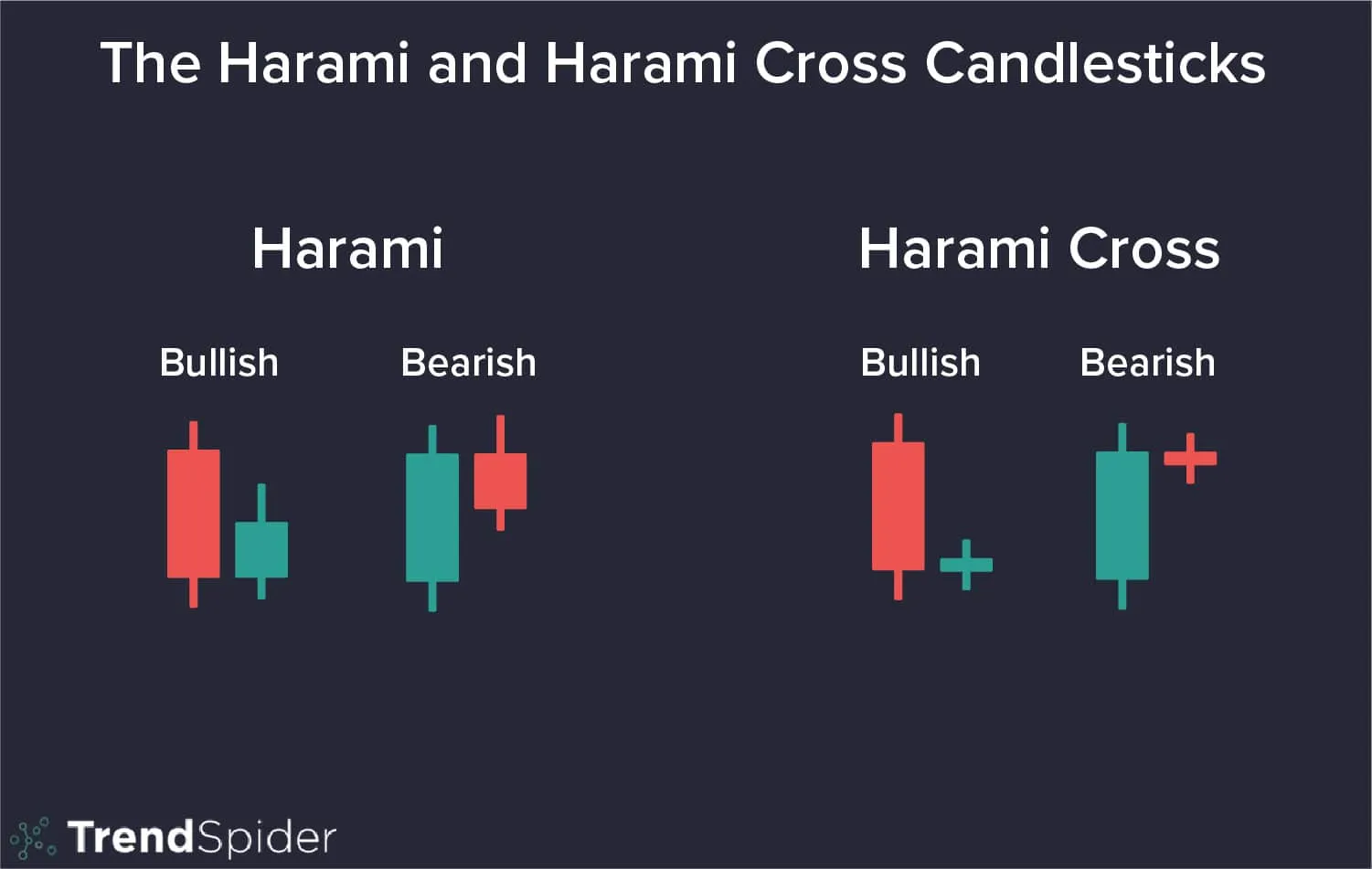
Bullish Harami Cross
- Appears after a downtrend.
- Candle 1 is a strong bearish candle (large red body).
- Candle 2 is a Doji inside candle 1's body.
- Action: Enter long when price breaks above the Doji's high or candle 1's high. Place stop loss below candle 1's low. Profit target can be prior resistance levels or a 1:2 risk-reward ratio.
Bearish Harami Cross
- Appears after an uptrend.
- Candle 1 is a strong bullish candle (large green body).
- Candle 2 is a Doji inside candle 1's body.
- Action: Enter short when price breaks below the Doji's low or candle 1's low. Place stop loss above candle 1's high. Profit target is prior support levels.
Real Example
Assume EUR/USD is in a downtrend. Day one: a bearish candle with a 100-pip body. Day two: price opens near the previous close, fluctuates slightly, and closes near the open, forming a Doji entirely within the bearish candle's body. This is a Bullish Harami Cross. A trader may wait for price to break above the Doji's high to buy, with a stop loss below the bearish candle's low.
Common Mistakes
- Confusing with Inside Bar pattern: Inside Bar can have a small body but not necessarily a Doji. Harami Cross requires the second candle to be a Doji.
- Trading immediately upon seeing the Doji without confirmation: Wait for price to break one of the pattern's highs/lows to confirm direction.
- Ignoring the main trend: Harami Cross works best at the end of a clear trend; avoid trading in a sideways market.
Summary
Harami Cross is a powerful reversal pattern when combined with trend and volume analysis. Traders should use additional indicators like RSI or MACD to increase reliability.
Content is for reference only, not investment advice. Forex trading carries high risk.
Save your learning progress
Create an account to keep lessons, watchlist symbols, and journal notes connected as you practice.