Advanced Head and Shoulders Pattern
Learn to identify and trade the Head and Shoulders pattern using advanced SMC and price action techniques.
Mark · Trader & Founder, Social Forex
Introduction to Head and Shoulders
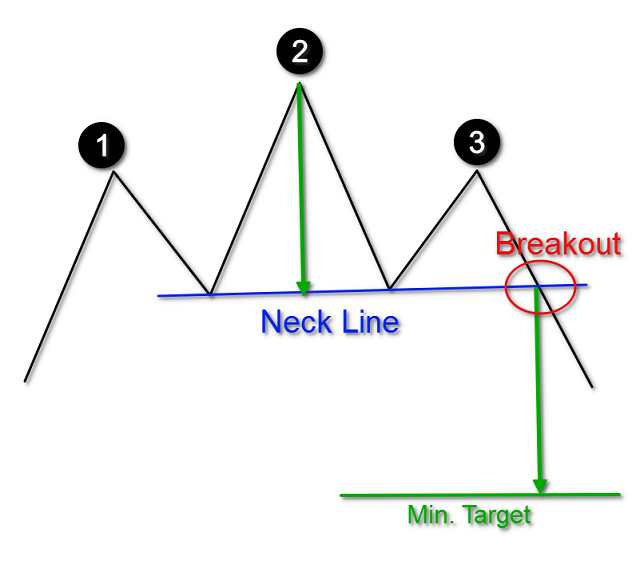
The Head and Shoulders pattern is a classic reversal pattern in technical analysis. At an advanced level, we combine it with Smart Money Concepts (SMC) to identify optimal entry points. The pattern consists of three peaks: left shoulder, head, and right shoulder. The neckline connects the two troughs between the shoulders. When price breaks the neckline, the trend reversal is confirmed.
Identification with SMC
- Left shoulder: Forms after an uptrend, often with high volume.
- Head: Higher peak than left shoulder, volume tends to decrease.
- Right shoulder: Lower peak than head, volume continues to decline.
- Neckline: Dynamic support/resistance line, may slope up or down.
- After right shoulder forms, price breaks below neckline for bearish confirmation.
How to Trade
- Entry: When candle closes below neckline (bearish H&S) or above neckline (bullish inverse H&S).
- Stop Loss: Place above right shoulder (or above head for more safety).
- Take Profit: Measure height from head to neckline, project downward from breakout. Or use liquidity zones per SMC.
Real Example
On EUR/USD H4 chart, H&S appears after strong uptrend. Left shoulder at 1.1200, head at 1.1300, right shoulder at 1.1250. Neckline sloping up at 1.1150. Price breaks neckline with strong bearish candle. Enter sell. Stop loss above right shoulder at 1.1260. Take profit 1.1000 (height 150 pips). Price drops to 1.0950.
Common Mistakes
- Confusing with triple top – triple top has three roughly equal peaks.
- Not waiting for neckline breakout confirmation.
- Stop loss too tight, getting stopped before move.
- Ignoring volume – declining volume is a weakening signal.
Content is for reference only, not investment advice. Forex trading carries high risk.
Save your learning progress
Create an account to keep lessons, watchlist symbols, and journal notes connected as you practice.