Ladder Top Pattern – Bearish Reversal
Advanced lesson on the Ladder Top pattern – a rare but highly reliable bearish reversal signal. Combine SMC and price action analysis for effective trading.
Mark · Trader & Founder, Social Forex
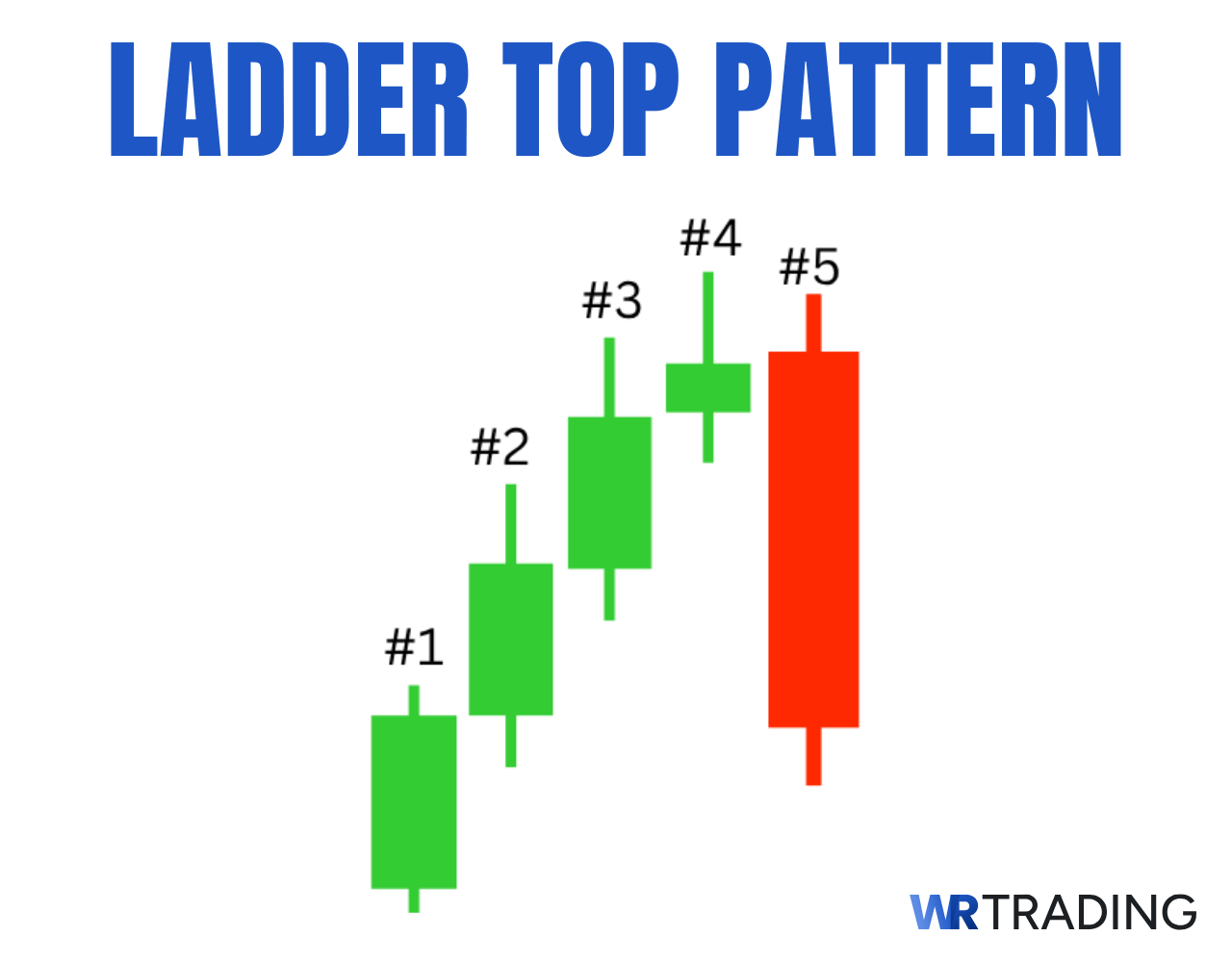
Definition
The Ladder Top is a rare bearish reversal pattern typically found at the end of a strong uptrend. It consists of at least three long-bodied candles (often Marubozu or large bodies with little to no wicks) forming a ladder-like structure, followed by a bearish gap and a closing candle lower. The gap signifies a fundamental shift in market sentiment.
How to Identify
- Candle 1: Long bearish body (often a bearish Marubozu) closing near its low.
- Candles 2 and 3: Similar long bearish bodies, each opening near or at the previous close, creating steps.
- Final candle (candle 4): Opens with a gap below the low of candle 3 and closes weakly (small body or long lower wick), confirming reversal.
- Volume often spikes during formation.
How to Trade
- Entry: After the confirmation candle closes, sell at market or wait for a minor pullback into the gap zone.
- Stop Loss: Place above the high of the third candle (highest step) or above dynamic resistance (e.g., EMA 20).
- Take Profit: Target the nearest swing low before the uptrend or previous buy-side liquidity zone. Use risk:reward 1:2 or 1:3.
Real Example: On EUR/USD H4, after a strong rally, three long bearish candles with a gap appear alongside volume spike. Entry on confirmation candle, stop loss above third candle high, target lower liquidity. Price dropped over 100 pips.
Common Mistakes
- Confusing with Three Black Crows (no gap).
- Trading in unclear trends or low volume.
- Setting stop loss too tight, getting stopped out by minor pullback.
- Not confirming with other signals like RSI divergence or SMC concepts (Order Block, FVG).
Content is for reference only, not investment advice. Forex trading carries high risk.
Save your learning progress
Create an account to keep lessons, watchlist symbols, and journal notes connected as you practice.